
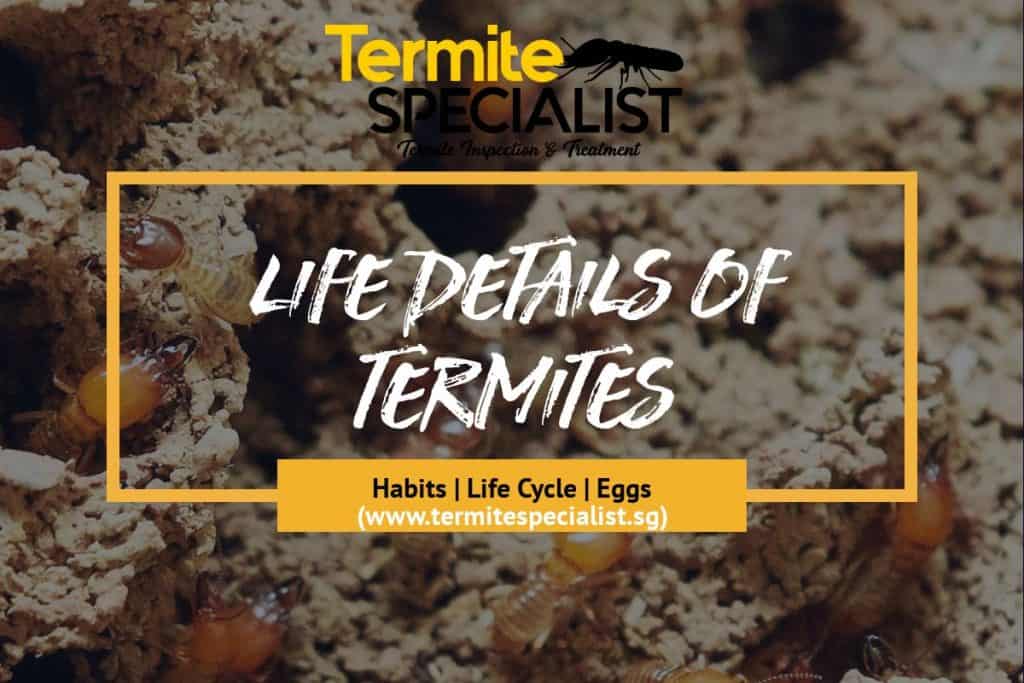
Life details of termites. It is said that for about 400 million years, termites have moved away from cockroaches. Sometime before that, plants were woody, and termites were unique feeders on this new type of food. (Ants, around 300 million years ago, their mortal enemy was recognizable).
Habits
Termites are social insects that live in a colony with three different departments: a queen, workers, and soldiers. To attach their nest to food sources, they create mud tunnels. To protect themselves from being exposed and dehydrated by the outside climate, the tunnels are made of moist soil.
Life Cycle
During her lifetime, a queen will lay millions of eggs. The eggs hatch into nymphs after about two weeks of incubation. The employees (worker termites) feed the soldier and queen termites. Then the nymphs mature into employees. They may separate themselves into workers, soldiers, and reproductive when they are sufficiently mature. The colony will grow, and from time to time the nest will expand. The colony will split into several small nesting sites as the foraging area expands.
Eggs
Termite eggs in form are tiny, white, translucent, and oval. The eggs are large enough for naked eyes to be visible. In her first brood, a newly developed queen will lay two dozen eggs. In the underground nest, eggs are laid and stored and are rarely seen by humans. Understanding the life cycle of termites is very important.
Concerned about termite activity on your property? Explore our Termite Control Singapore services to learn how we inspect infestations and recommend suitable treatment.
Pingback: What Type of Wood Do Termites Eat? Full Guide & Examples