
To check for termites in Singapore, start by identifying common signs such as mud tubes, hollow-sounding wood, discarded wings, live termites, and others. Gather the necessary tools, including a flashlight, a screwdriver, gloves, and a moisture meter. Look around the corners and confined areas, examine the high-moisture areas, tap the wooden structure for sound, probe the infested wood with a screwdriver, and finally document the result. Call us, NEA NEA-certified termite specialist with 13 years of experience, if the infestation is too high.
Why You Should Regularly Check for Termites
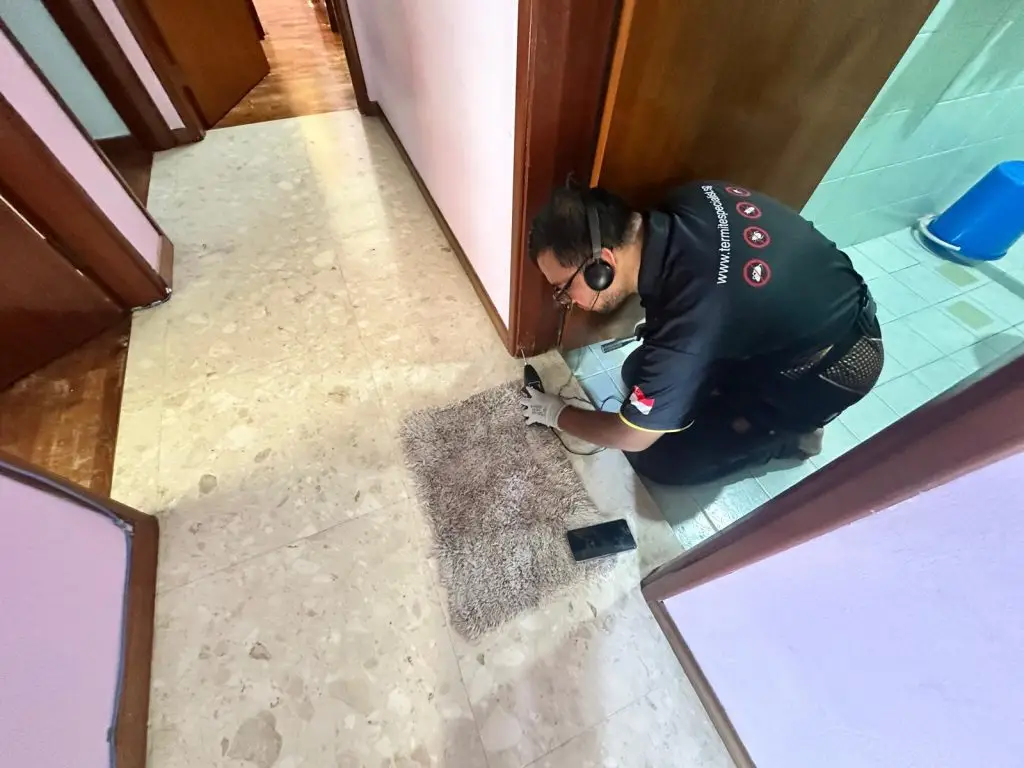
Termite activities are often hidden with subtle signs. Detecting the signs can prevent structural damage to wooden structures before spending thousands on repair. Besides, regular inspection reduces the risk of long-term infestation. Moreover, the colony expands too quickly if left unchecked and untreated. So, inspect and identify the termite infestation before it’s too late.
9 Warning Signs of Termite Activity You Shouldn’t Ignore
- Mud tubes or shelter tubes along the foundation or walls.
- Hollow-sounding wood when tapped with fingers or a screwdriver.
- Discarded white wings of termites.
- Termite droppings (frass). These will look like sawdust or coffee grounds.
- Tiny exit holes in wooden structures and walls.
- Tapping or clicking sounds inside walls due to the head tapping of worker termites.
- Dark stains or water damage.
- Soft or spongy, crumbling wood when tapped.
- Live termites near light sources.
How to Check for Termites Yourself in Singapore
Required Inspection Tools
- Flashlight
- Screwdriver
- Moisture meter
- Gloves
Step 1. Inspect the Perimeter of Your Home
Look around your home and check exterior walls and foundation for mud tubes or other common signs. The tubes are thin and dried tunnels built to create a travel path and protect themselves from predators and dry air.
Step 2. Tap Wooden Structures
Check the wooden structures with infestation signs and gently tap them with your knuckles or a screwdriver and listen to the sound. If it is a hollow sound or if you notice wood damage, there might be a tunnel inside the structure.
Step 3. Check for Discarded Wings, frass, and Dead Termites
Check around your door frames, light fixtures, and window sills to find discarded white wings. It indicates that flying termites are ready to mate and establish a new colony at your property. Find frass also indicates termite infestation. You may also find dead termites nearby.
Step 4. Examine Moisture Areas
Termites love to stay and breed in a moist environment. Take your flashlight and inspect the areas such as crawl spaces, under sinks, and areas with poor drainage or plumbing facilities. These are places with the most moisture. Look for any moisture damage, dark water signs, and molds. Check for musty odors in enclosed areas, indicating higher moisture and favourable spaces for termites.
Step 5. Probe Wood with a Screwdriver
Use your finger or a screwdriver and press it into the suspected wood. If you find it soft, crumbles, or has tunnels inside, it is certainly a drywood termite attack. This method is highly useful for attic rafters, window frames, and any wooden structures.
Step 6. Inspect Mulch, Wood Fencing & Soil Contact Areas
Termites build their tunnels through mud or mulch from the soil to wood contact areas. Check the landscape of your home, especially in wooden fencing or stacked timber. Pay attention to flower beds, moist soils, and foundation areas.
Step 7. Document & Monitor Activity
Use your smartphone and take pictures of infestation signs for comparison, and send them to the pest control company. It helps you track the termite growth as well.
When It’s Time to Call a Certified Pest Control Company
If you find an active or large termite colony or extensive damage to your property, it is high time you call a certified pest control expert like us.. We will examine the area to understand the termite type and infestation level to set a customized plan to eradicate them permanently. Call us at +65 6910 3776 or visit our office at 50 Bukit Batok Street 23, #05-30 MIDVIEW BUILDING, Singapore 659578. Get direction.
How to Prevent Termite Infestation Easily
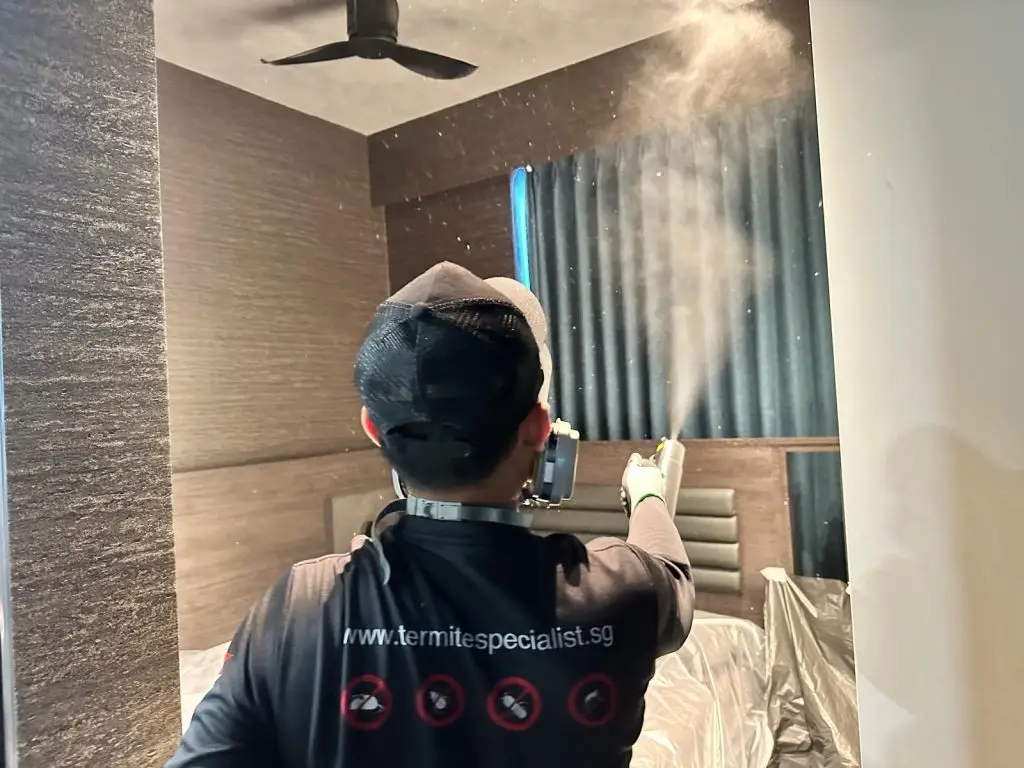
- Remove any moisture source you have. Fix leaky pipes, maintain proper drainage, and fix any plumbing issues.
- Place a dehumidifier in confined areas to reduce the moisture level and keep termites away.
- Seal gaps and cracks to prevent termite entry.
- Keep wood mulch or firewood away from your home to reduce soil-to-wood contact.
- Use chemical barriers during remodeling or construction.
- Schedule regular inspections to assess the infestation level, especially if you have older homes.
FAQ
Q. Are termites common in Singapore?
Yes, the humid environment, along with the greenery and aging building structure, makes it an ideal environment for termites to live and breed.
Q. How much does termite control cost in Singapore?
You can expect to pay $60 to $200, depending on the termite treatment type, infestation level, and building structure.
Q. What is the best medicine for termites?
You can try termiticide, such as Fipronil-based solutions (e.g., Termidor), Imidacloprid, or Baiting systems for the best results.