
Termite Control in Singapore: Treatment That Eliminates the Colony
By Termite Specialist Pte Ltd. Founder Roy Jenpire, 14 years in termite control. Updated November 2026.
Termite control in Singapore from Termite Specialist Pte Ltd starts with finding the colony, not spraying the termites you can see. Our NEA-certified technicians locate activity with thermal imaging and moisture mapping, confirm the species, then treat it with baiting, soil treatment or corrective treatment. Since 2019 we have treated 3,500+ HDB flats, condos, landed homes and commercial premises, with same-day slots across every district.
No-obligation quote after the inspection. We reply right away.
NEA
Licensed vector control operator
2019
Est. 2019, 3,500+ properties treated
5.0
From 200+ Google reviews
Daily
Same-day slots, 9 am to 10 pm
| Company | Termite Specialist Pte Ltd, est. 2019, NEA-licensed vector control operator |
| Detection | Thermal imaging and moisture meter, no drilling to inspect |
| Methods | Baiting, soil (anti-termite) treatment, corrective treatment, drywood treatment, monitoring |
| Species | Subterranean, drywood, dampwood |
| Properties | HDB, BTO, condo, landed, shophouse, commercial, construction sites |
| Follow-up | Every 7 to 14 days until no activity is detected |
| Availability | Same-day slots, 9 am to 10 pm daily, all districts |
Why we treat the colony, not the termites you can see

The termites in your door frame are foragers. The queen, the eggs and most of the colony are in the soil under the building or deep inside timber. Spray the foragers and the colony simply opens a new entry point. That is why “treated” homes get termites back within months.
So every job starts with two questions: where is the activity coming from, and which species is it? The answers decide the method. The wrong method on the wrong species is the most common reason termite treatment fails in Singapore.
Which termite do you have?

Coptotermes gestroi, behind most damage in Singapore homes.
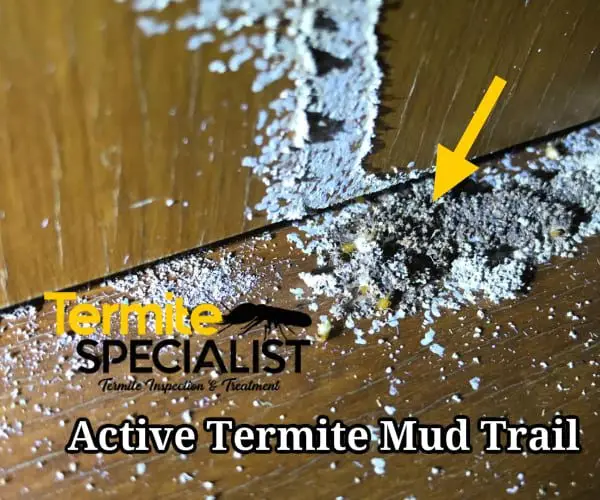
How we confirm it: mud tubes on walls, pipes or skirting; soil or slab contact.
What we do: baiting to eliminate the colony, or corrective treatment at entry points.
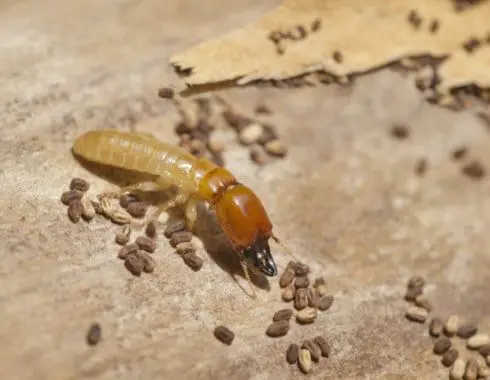
Cryptotermes species, living inside dry timber.
How we confirm it: sand-like frass pellets below the wood; no mud tubes.
What we do: direct injection or foaming of the timber. Soil treatment does not work on drywood.

Found where timber stays wet.
How we confirm it: damage beside leaks, wet areas, rotting garden timber.
What we do: fix the moisture, then treat the timber.
Not sure? WhatsApp a photo, or compare with our signs of termites guide.
Termite treatment methods we use in Singapore
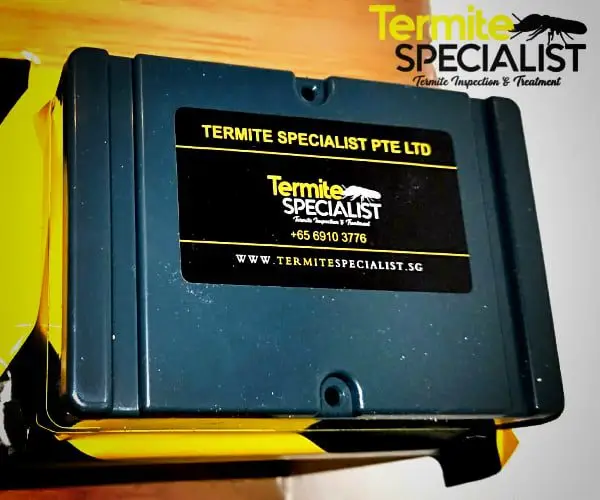
Termite baiting system
Stations go into the ground around the building and on active trails indoors. Foragers carry the bait to the nest and the colony collapses from the inside. Best for active subterranean termites in an existing home: it reaches the colony with no indoor drilling. Colony collapse takes several weeks to a few months, depending on colony size, and we check and top up the stations on every follow-up visit.
Read more: termite baiting treatment.
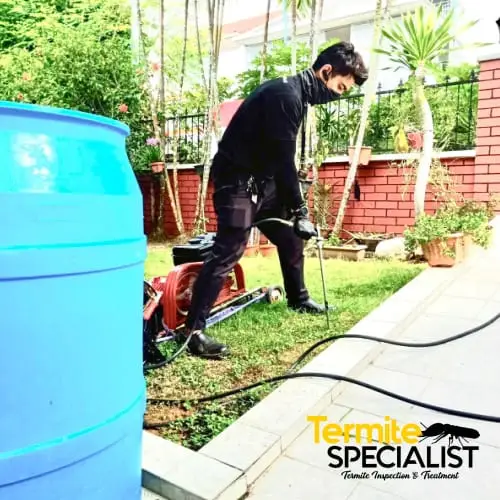
Soil (anti-termite) treatment
An NEA-registered termiticide is applied to the soil under and around the floor slab, before the slab or apron is laid, so termites from the ground cannot reach the structure. Standard for new builds, extensions and major renovations.
Read more: termite soil treatment.
Corrective treatment for existing homes
We drill and inject termiticide where termites are entering: skirting, door frames, wet areas, wall-to-floor joints. It cuts the current route in and is usually paired with baiting so the colony is dealt with too.
Read more: corrective termite treatment.

Drywood treatment
Drywood termites live inside the wood they eat, with no link to the soil, so barriers and in-ground baits never reach them. We inject or foam the infested timber directly and check adjoining wood. If a piece of furniture is beyond saving, we say so.
Read more: drywood termites.
Monitoring stations and wood protectant
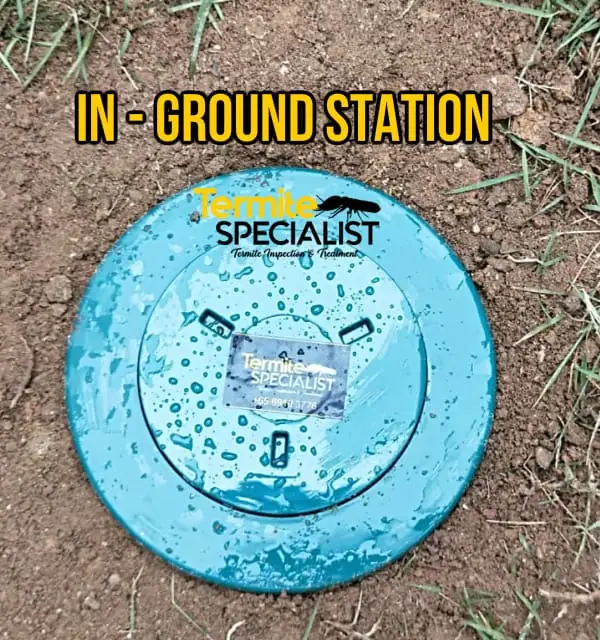
After treatment, in-ground monitoring stations give early warning and a wood protectant makes exposed timber unattractive to termites. We recommend an annual check for landed homes, older estates and any property with termite history.
Which method fits which situation
| Method | Best for | Time to result | Disruption | Follow-ups |
|---|---|---|---|---|
| Baiting | Active subterranean colony, existing home | Weeks to a few months | Low, no indoor drilling | Every 7 to 14 days until clear |
| Soil treatment | New builds, extensions, renovations | Barrier from day one | Before slab or apron is laid | Inspection on request |
| Corrective | Active entry points, existing home | Days for treated areas | Drilling at entry points | Every 7 to 14 days until clear |
| Drywood | Furniture, frames, beams | Days for treated timber | Low | Re-check of adjoining timber |
| Monitoring | Prevention | Ongoing | None | Scheduled checks |
What happens on a termite control job
What customers say
5.0 from 200+ Google reviews. Read all reviews.
How long the protection lasts
Every treatment includes follow-up visits until no activity is detected, at no extra charge. After that we recommend an annual inspection for landed homes, older estates and any property that has had termites, because a new colony can arrive from neighbouring soil or timber at any time.
A soil barrier under a new build protects the structure from the day it is applied; keep timber off the ground and fix leaks early and it stays that way.
Precautions for children, pets and food areas
We use NEA-registered termiticides and baits, applied to label directions by certified technicians. Before the visit we tell you what to cover in kitchens, where pets and aquariums should be, and when each treated room can be used again.
Bait stations are sealed and placed out of reach.
How much does termite treatment cost in Singapore?
It is quoted after the inspection, because five things set the price and none can be judged over the phone:
| Property type | A 4-room flat and a three-storey terrace need very different coverage |
| Size and storeys | More timber, floors and garden mean more stations or injection points |
| Species | Drywood work is local to the timber; a subterranean colony needs colony-level work |
| Method | A baiting programme with follow-ups is not a one-off corrective treatment |
| Severity | One door frame is not activity in three rooms and the ceiling |
Every quote states the findings, the species, the method and the visits included, so you can compare it line by line with any other quote.
WhatsApp us your property type and what you’ve seen. We’ll explain the inspection and give the treatment price after it.
Exterminator, pest control company or termite specialist?
Exterminator usually means a one-off kill of the termites you can see. The damage stops; the colony doesn’t. Pest control company is an NEA-licensed operator treating many pests; termites may be one service in twenty. Termite specialist means the main work is locating colonies, confirming species and controlling termites over time.
In Singapore termites are often called white ants. They are not ants, and ant sprays, baits and chalk do nothing to them. That is why “white ants” treated with ant products keep coming back.
Whoever you call for termite removal, ask four things: NEA licence, how they confirm species, the follow-up plan, and what happens if termites return.
New builds, renovations and contractors
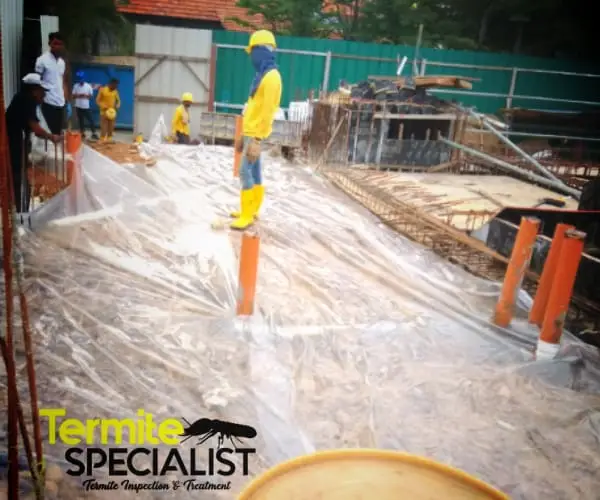
Soil treatment is applied before the floor slab and apron are laid, forming a barrier under the building’s footprint. We work to your pour date and treat extensions and reinstatement areas.
For renovations in existing homes, we treat before new built-in carpentry goes in, so it is never installed over an active colony. WhatsApp the site address and pour date for a schedule.
Why 3,500+ Singapore homes and businesses have used Termite Specialist
NEA-licensed
Founded 2019 by Roy Jenpire
Termites are our core service
5.0 from 200+ reviews
Follow-ups until it's done
Same-day slots

Termite control across Singapore
We treat termites in every district: Hougang, Sengkang, Punggol, Tampines, Bedok, Ang Mo Kio, Yishun and Sembawang in the east and north; Bukit Batok, Jurong and Clementi near our office at 50 Bukit Batok Street 23, #05-30 Midview Building. HDB, BTO, condo, landed, shophouse or commercial, the process is the same. See areas we serve.
Termite control FAQ
Which termite treatment is right for my home?
There is no single best treatment. Species and property decide. Active subterranean termites in an existing home: baiting, sometimes with corrective treatment at entry points. New builds and renovations: a soil barrier. Drywood termites in furniture or frames: direct treatment of the timber. The inspection confirms which applies to you.
How much does termite control cost in Singapore?
It depends on property type, size and storeys, species, method and how far the activity has spread, so we quote after the inspection rather than guess over the phone. Every quote states the findings, the method and the visits included. WhatsApp us your property type to start.
How long does termite treatment take to work?
Baiting eliminates a subterranean colony over several weeks to a few months, depending on colony size, with follow-up visits every 7 to 14 days. Corrective and drywood treatments act on the treated timber within days. A soil barrier protects from the day it is applied. We keep visiting until no activity is detected.
Will you need to drill holes?
Not to inspect. We use thermal imaging and a moisture meter. Baiting needs no indoor drilling. Corrective treatment does mean small holes at entry points such as skirting and door frames, and we show you where before we start.
Drywood or subterranean: how do I tell?
Subterranean termites leave mud tubes on walls, pipes or skirting and need soil contact. Drywood termites leave sand-like pellets below the wood and live entirely inside dry timber. They need different treatments, which is why we confirm the species during the inspection before recommending anything.
Are white ants the same as termites?
Yes. “White ants” is the common Singapore name for termites, but they are not ants, and ant sprays, baits and chalk have no effect on them. If white ants keep returning after ant products, book an inspection so the colony can be located and treated.
What precautions are needed for children and pets?
We use NEA-registered products applied to label directions. Before the visit we tell you what to cover in kitchens, where pets and aquariums should be, and when each room can be used again. Bait stations are sealed and placed out of reach. Ask about any specific concern before booking.
Who pays for termite treatment in an HDB flat or condo?
Inside the unit, usually the owner, or whoever the tenancy agreement makes responsible for pest control. Common areas such as corridors, void decks and landscaping are usually the town council’s or the MCST’s. It varies, so check your tenancy agreement and MCST by-laws, and send us photos so we can tell you where the activity is coming from.
Is Termite Specialist licensed by NEA?
Yes. Termite Specialist Pte Ltd is an NEA-licensed vector control operator and our technicians are NEA-certified. Founded in 2019 by Roy Jenpire, 14 years in termite control, we have treated 3,500+ homes and businesses across Singapore.
What if the termites come back after treatment?
Follow-up visits continue until no activity is detected, at no extra charge. We then recommend an annual inspection, because a new colony can arrive from neighbouring soil or timber at any time. If you see mud tubes, frass or swarmers again, WhatsApp us a photo and we will schedule a re-check.
Book a termite inspection
Tell us what you’ve seen and where. We’ll confirm a slot, often the same day, and quote after the inspection.