
You have found a small pile of granules near a window frame, beneath a wooden cabinet, or along a skirting board. They might be uniform brown pellets the size of a sand grain, or coarse fibrous debris mixed with what looks like tiny wood chips. Getting the identification right matters: one is a sign of drywood termites actively feeding inside the wood structure of your home, the other is carpenter ant excavation waste from a nesting colony. Both require professional treatment, but the urgency, treatment path, and the pest company you call differ significantly.
This guide explains exactly what each type of frass looks like, how to inspect your home methodically, the critical distinction between drywood and subterranean termite signs, and what steps to take before calling a licensed pest professional in Singapore.
What Is Termite Frass? (And Which Termites Produce It)
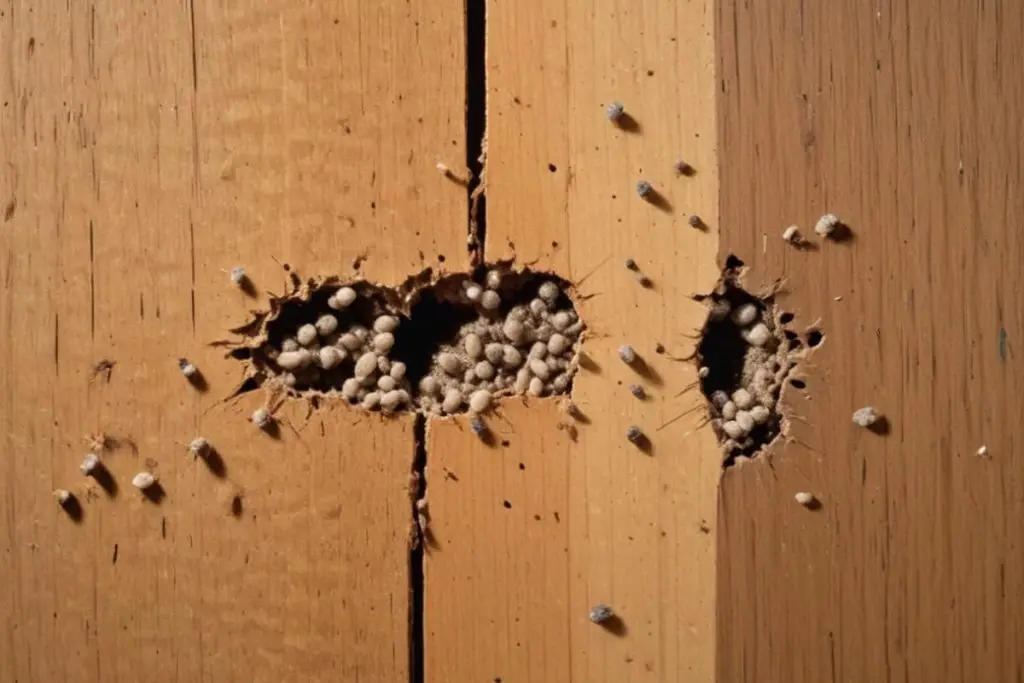
Termite frass is the waste material produced when termites digest cellulose from wood. The term is most accurately applied to drywood termites, which produce distinct, dry pellets that they eject from small holes in infested wood.
Drywood Termite Frass: Hexagonal Pellets and Kick-Out Holes
Drywood termites in Singapore produce frass in a form unique among insects: hard, dry pellets approximately 0.5 to 1 mm long with six concave sides, giving them a hexagonal appearance when viewed closely. The colour ranges from tan to dark brown and varies with the wood type the colony is feeding on. A fresh pile typically looks like a small mound of coffee grounds or coarse pepper directly beneath the infested area.
Drywood termites keep their galleries clean by pushing frass out through kick-out holes — small, circular openings 1–2 mm in diameter in the surface of infested wood or drywall. If you find a tidy pile of pellets directly below a pinhole, this is characteristic of drywood frass ejection. The pellets are clean: no insect body parts, no wood splinters, just uniform gritty pellets.
Common locations in Singapore homes: wooden furniture, timber door frames, window casings, roof trusses, hardwood flooring, and timber panels in HDB and condominium units.
Important: Subterranean Termites Do Not Produce Frass Pellets
This is a frequent point of confusion. If you have found mud tubes along your walls, foundation, or skirting boards, that is a sign of subterranean termites — not drywood termites, and not carpenter ants. Subterranean termites do not produce the frass pellets described in this article. They use their droppings as building material in mud tubes and do not eject pellets through kick-out holes.
In short: frass pellets = drywood termites. Mud tubes = subterranean termites. If you find mud tubes, see our full guide to signs of termite infestation in Singapore for the correct identification and next steps.
What Is Carpenter Ant Frass? (Excavation Debris, Not Droppings)
Ant frass is a misnomer: it is not faecal matter. Carpenter ants do not eat wood. They excavate it to create nesting galleries, and the debris they push out of their tunnels is a mixture of wood shavings, sawdust fragments, dead ant body parts (legs, wings, antennae), and food remnants.
This debris is coarser and more irregular than termite frass. It has a fibrous, wood-chip texture rather than a gritty, pellet texture. Under close inspection, you will typically find visible insect fragments mixed into the debris — a key distinguishing marker.
Carpenter ant frass is most commonly found beneath wooden door frames, behind skirting boards, under bathroom cabinets in areas with past water leaks, and below roof timber in older landed properties. The presence of frass indicates that a colony is already established and actively expanding its tunnels. For carpenter ant treatment in Singapore, see our ant pest control page.
How to Visually Identify Termite Frass vs Ant Frass
Use this four-point check when you find unidentified debris near wood:
1. Shape and Uniformity
Drywood termite frass: uniform in size and shape — the pellets look consistent, like coffee grounds. Each pellet has six slightly concave sides (hexagonal cross-section). Carpenter ant frass: irregular and variable. The pile looks like a mix of coarse sawdust, shavings, and grit with no uniform particle shape.
2. Contents Under Magnification
Use a phone camera zoomed in or a magnifying glass. Termite frass: clean pellets only — no insect parts. Carpenter ant frass: you will find insect legs, wing fragments, and body segments mixed in with the wood debris. This single test is the most reliable way to distinguish the two.
3. Texture
Pick up a small amount of the debris between your fingers. Termite frass feels fine and gritty, similar to coarse sand or coffee grounds. Carpenter ant frass feels fibrous and splintery, more like compressed sawdust or woodchip.
4. Associated Evidence at the Source
Look at the wood surface directly above or behind the pile. Drywood termite frass: look for a small circular kick-out hole (1–2 mm) with clean edges. No ant trails. No visible insect activity near the pile. Carpenter ant frass: look for smooth, clean-edged oval galleries in the wood. You may see ants entering and exiting the galleries, particularly in the evening. Damp or previously damp wood nearby is common.
Termite Frass vs Ant Frass: Comparison Table
| Feature | Carpenter Ant Frass | Drywood Termite Frass |
|---|---|---|
| What it is | Excavation debris from nest-building (not droppings) | Digested wood waste ejected from feeding tunnels |
| Pellet shape | Irregular, no consistent shape | Hexagonal pellets with 6 concave sides (~0.5–1 mm) |
| Texture | Coarse, fibrous, splintery | Fine, gritty, uniform — like coffee grounds |
| Colour | Light brown to yellowish; variable | Tan to dark brown (matches wood being consumed) |
| Insect parts present | Yes — legs, wings, ant body fragments common | No — pellets are clean, no insect parts |
| Ejection method | Pushed out of gallery openings and entry holes | Ejected through kick-out holes (1–2 mm circular openings) |
| Associated wood signs | Smooth, oval-shaped galleries; damp or decayed wood | Kick-out holes in surface; hollow-sounding wood when tapped |
| Ants/insects visible? | Often — look for carpenter ant trails at dusk | Rarely — workers stay inside wood galleries |
| Moisture preference | Damp, water-damaged, or decayed wood | Dry, solid hardwood (no moisture required) |
| Subterranean termites? | N/A | Subterranean termites do NOT produce frass pellets — they use mud tubes |
| Urgency | High — colony already established and nesting | High — active feeding colony inside structural timber |
How Each Pest Damages Wood Differently
Drywood termites consume the wood itself. They digest cellulose and excrete pellets. Over time, the colony hollows out the interior of timber while leaving a thin exterior shell intact, making the damage invisible until the wood surface is pressed or breaks. In Singapore, infestations in furniture and internal door frames can persist silently for years before visible damage appears.
Carpenter ants excavate wood for nesting, not food. They do not eat wood. Once the gallery system is complete, excavation may slow or stop — but the colony will expand into new galleries as the population grows, progressively weakening structural timber. Carpenter ants strongly prefer damp, decayed, or previously water-damaged wood. If you find carpenter ant frass, look for a water ingress source nearby.
Both cause structural damage over time and require professional treatment. Neither should be treated as a minor nuisance.
Step-by-Step: How to Inspect the Frass You Found
Follow these steps in order before contacting a professional:
- Observe without touching. Note the pile size, colour, location relative to the wood surface, and whether it appears fresh (clean pile) or old (flattened, dusty).
- Photograph the frass pile from directly above, then photograph the nearest wood surface above it. Capture any holes, staining, or surface damage.
- Check for kick-out holes. Look at the wood surface directly above the pile. A small circular hole with clean edges suggests drywood termite activity.
- Check for ant trails. Scan the floor, wall junction, and nearby surfaces for moving ants. Carpenter ants are often active in the evenings. Termites rarely expose themselves.
- Probe the surrounding wood gently. Use a pen or your fingernail. Termite-damaged wood sounds hollow when tapped; it may crumble inward under light pressure. Carpenter ant galleries are smooth-walled and clean inside.
- Check for associated signs. Drywood: look for other signs of termite infestation such as discarded swarmer wings near window sills. Carpenter ants: look for the entry point, often a crack or gap near plumbing or a window frame.
What to Do When You Find Frass (Before Calling a Professional)
Do Not Sweep, Vacuum, or Spray the Frass Immediately
This is the most common mistake Singapore homeowners make. Sweeping the frass pile destroys evidence that the pest technician needs to identify the species and severity of the infestation. Spraying a DIY insecticide can scatter the colony deeper into the wood without eliminating it, making treatment harder and less effective. Leave the frass in place until after the professional inspection.
What to do instead:
- Take clear photographs of the pile and the surrounding wood surface.
- Note the date the frass was discovered and whether the pile appeared overnight or accumulated over time.
- Inspect adjacent rooms and other wooden surfaces using the visual ID steps above.
- Do not apply any pesticide, borate spray, or DIY treatment before the inspection — this interferes with the technician’s assessment.
- Contact a licensed termite inspection professional in Singapore for an in-person assessment.
When to Call a Pest Professional in Singapore
Call a licensed pest professional if:
- You have found a pile of frass and cannot immediately identify it as dust or sawdust from recent drilling or cutting work.
- You find a kick-out hole in wooden furniture or a structural timber component.
- You hear hollow sounds when tapping wooden floors, skirting boards, or door frames.
- You see discarded wings near windows or light fittings after rainfall (this indicates swarming activity).
- You find multiple frass piles in different locations within the same property.
- A family member has previously identified a termite or carpenter ant infestation in the same or an adjacent unit.
Termite Specialist Pte Ltd provides licensed termite inspections and termite control in Singapore for HDB flats, condominiums, and landed properties. Contact us at +65 6910 3776. NEA certified. 13 years of experience.
Frequently Asked Questions
What does termite frass look like?
Drywood termite frass consists of tiny, uniform, hexagonal pellets approximately 0.5–1 mm long. The colour is tan to dark brown depending on the wood type. The pellets are hard, dry, and gritty — similar in texture to coarse coffee grounds or fine sand. There are no insect parts in termite frass. Piles are found below kick-out holes in infested timber.
How do I tell termite frass from carpenter ant frass?
The most reliable test: look for insect body parts. Carpenter ant frass contains legs, wings, and ant body fragments. Termite frass is clean pellets only. Also check texture: termite frass is gritty and uniform; ant frass is fibrous and irregular. Finally, look for kick-out holes (termite) versus smooth-walled ant galleries in the wood directly above the pile.
Is termite frass dangerous?
Termite frass itself is not chemically dangerous to humans. The danger is what it indicates: an active drywood termite colony consuming the timber inside your walls, furniture, or structural elements. The longer the colony feeds undetected, the more extensive the structural damage. The frass is a diagnostic sign — act on it, do not simply clean it up and ignore it.
Can I have both termite frass and ant frass in the same property?
Yes. In Singapore’s humid climate, a single property can simultaneously host drywood termites in hardwood furniture or door frames and carpenter ants in damp timber near a bathroom or kitchen. If you find piles that look different from each other — some uniform and gritty, others fibrous and mixed — photograph both separately and tell the pest technician the exact location of each.
Does termite frass always mean there is an active infestation?
Not necessarily always active at the time you find it, but a frass pile indicates that drywood termites have been feeding in that location. In many cases the colony is still present. Fresh frass has a clean, bright appearance; old frass is dusty or flattened. Even if the frass appears old, a professional inspection is needed to confirm whether the colony is still active.
What is the difference between subterranean termite signs and drywood termite frass?
Subterranean termites do not produce frass pellets. They use their droppings as building material in mud tubes. If you see mud tubes running along your walls, foundation, or skirting boards, that is subterranean termite activity, not drywood. See our full guide to signs of termite infestation in Singapore for a complete comparison of both species’ warning signs.
Found Frass in Your Home? Get a Professional Assessment
If you have found frass near wooden structures and are unsure whether it is termite or ant activity, a licensed inspection can confirm the species and recommend the correct treatment.
Termite Specialist Pte Ltd — Termite Inspection Singapore | Termite Control Singapore
Phone: +65 6910 3776
50 Bukit Batok Street 23, #05-30 Midview Building, Singapore 65957