
Flying Termites in Singapore: What They Are and What To Do
Flying termites, also called alates or swarmers, are the reproductive caste of a termite colony. They appear when a mature colony is ready to expand and are most commonly seen in Singapore after heavy rain or on warm, humid evenings. Seeing flying termites does not mean your home is infested, but it does mean a mature colony is nearby. If the swarm came from inside your home rather than outside, a professional inspection is recommended.
What Do Flying Termites Look Like?
To identify flying termites, you need to know what to look for. They can easily be mistaken for flying ants, but there are clear physical differences.
Flying termites, also known as alates, are the reproductive stage of a termite colony. Depending on the species, they range in size from 1/4 to 3/8 of an inch. Flying male and female alates emerge from existing colonies to mate and establish new nests elsewhere.
Flying ants differ in shape: they have narrow, pinched waists and bent antennae at 90-degree angles. Swarming carpenter ants are the species most commonly confused with termites.
- Flying termites range in colour depending on species, but generally appear in a beige or tan shade similar to other termite castes.
- They have two straight antennae with a slight curve, compared to the sharply bent antennae of ants.
- They have four wings of equal length that are white, translucent, and veined. Ants have two unequal wing pairs, with larger forewings.
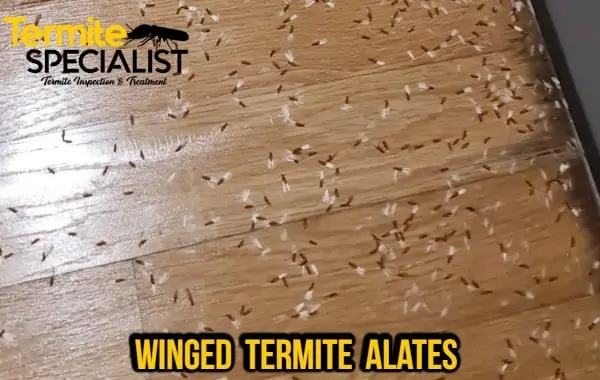
- When flying termites land, they shed their wings. Finding small, uniform wing piles around your home is often the first sign of a swarm.
Types of Flying Termites Found in Singapore
Flying termites swarm when their colony reaches maturity and environmental conditions are right. In Singapore, swarming is most commonly triggered by heavy rainfall and warm, humid temperatures. Three species produce flying termites in Singapore.
Subterranean termites are the most commonly encountered flying termites in Singapore. They prefer moist environments and build their nests in soil and rotting timber. Colonies take several years to mature before producing alates. Once mature, a colony can release hundreds of swarmers in a single evening. Subterranean termites are responsible for the majority of serious structural timber damage in Singapore homes.
Drywood termites with wings emerge from smaller colonies established directly inside dry timber such as furniture, door frames, and timber flooring. Their swarms are typically smaller in scale than subterranean swarms. For full information on drywood termite signs, damage, and treatment, see our drywood termites guide.
Dampwood termites are associated with wet or rotting timber and are more common in outdoor areas such as parks and gardens than inside residential buildings. They are the least common type found in Singapore homes. For more information, see our dampwood termites guide.
Flying Termite Season in Singapore
Singapore does not have a single flying termite season the way countries with cold winters do. Because temperatures stay warm year-round, termite colonies can produce swarmers at multiple points during the year. Swarming activity is not random, however. It is driven by specific weather conditions.
The highest-risk periods for flying termite activity in Singapore are:
April to June: The end of the northeast monsoon and onset of the inter-monsoon period brings frequent afternoon downpours followed by warm, humid evenings. This is when swarming events are most commonly reported in residential areas.
October to December: The southwest monsoon transition and the start of the northeast monsoon creates a second peak period. Heavy rain followed by clearing skies and warm temperatures provides similar swarming conditions.
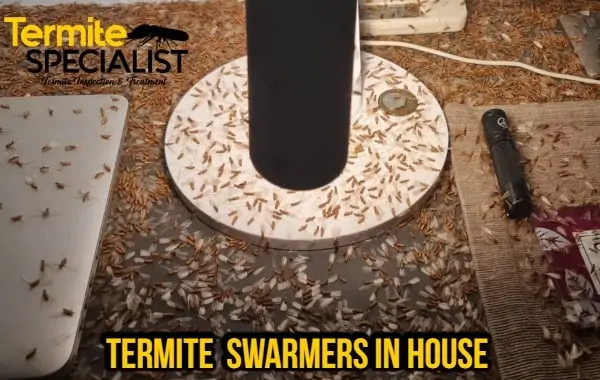
Flying termites are most active in the hours after sunset. They are drawn strongly to light sources, which is why sightings cluster around windows, open doorways, and light fittings in the evening.
If you see flying termites inside your home, they may have entered from outside through windows or gaps, or they may have emerged from a colony already inside the structure. The location and pattern of the sighting determines which is more likely. This is covered in more detail in the section on what to do when you see flying termites.
Why Flying Termites Appear After Rain or Humidity
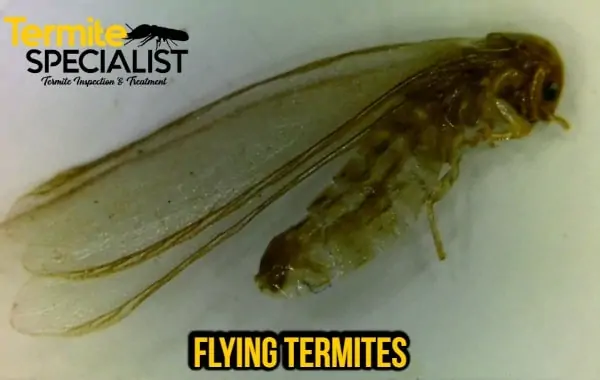
Flying termites, or alates, are the reproductive caste of a termite colony. Their sole purpose is to leave the existing colony, mate, and establish a new one. The timing of their flight is controlled by environmental conditions.
Rain and humidity trigger swarming for two practical reasons.
The first is soil conditions. After rain, moist, softened soil is easier for a newly mated pair to burrow into and start a new colony. A founding pair that lands on dry, compacted ground is unlikely to survive long enough to establish a nest. Rain improves their odds of survival significantly.
The second is atmospheric signalling. Termite colonies respond to shifts in air pressure and relative humidity. A drop in barometric pressure during rainfall, followed by a return of warm, humid air as the rain clears, acts as a reliable environmental signal that swarming conditions are ready. Mature colonies release their alates within hours of this shift.
In Singapore, this pattern is most pronounced during the inter-monsoon periods when short, intense afternoon downpours are followed by warm evenings. Swarming typically begins shortly after sunset on these evenings.
The practical implication for homeowners: if flying termites appear at your property every year following the same type of weather event, a mature colony is within flight range. If they appear from inside the building rather than entering through windows or doors, that colony may be inside your home.
Flying Termites in HDB, Condo, and Landed Homes
The risk profile of a flying termite sighting depends partly on the type of property you live in.
HDB Flats
Flying termite sightings in HDB flats are common during wet season evenings. Most are entry events: alates have entered from outside through open windows, gaps around piping, or poorly sealed utility openings. Flying termites that enter from outside will die quickly indoors if they cannot find a suitable nesting site. This is not an infestation.
The more serious scenario is when alates emerge from inside the flat, from wall joints, cornices, ceiling board edges, or built-in timber cabinetry. Termite colonies can establish themselves inside HDB walls in timber framing, ceiling boards, and the timber core of hollow doors and built-in furniture.
Wing piles found near skirting boards, internal light fittings, or timber furniture joints rather than near windows and entry points indicate the swarm came from within and warrant a professional inspection.
Condominiums
Condominium units in developments built before 2000 often contain more timber in their original finishes than newer HDB flats. Parquet flooring, timber ceiling features, and wood-framed partitions are common infestation sites in older condos.
Flying termites emerging from within a condo unit rather than entering from outside should be treated as a warning sign. Units on upper floors seeing alates at light fittings late at night are most likely receiving swarmers from outside. Units on lower floors or penthouses with garden or ground-floor access carry higher subterranean termite risk.
Landed Properties
Landed homes in Singapore typically contain more structural timber than high-rise units, including roof trusses, stair framing, timber flooring, and door frames. Both subterranean and drywood termite colonies can become established in landed structures.
Flying termites appearing from roof voids, attic spaces, or timber ceiling structures in a landed property should prompt a professional inspection of those areas. For landed homes specifically, drywood termite activity in roof timbers is a separate risk that requires a different inspection approach. See our drywood termites guide for more information.
What To Do When You See Flying Termites
Step 1: Note where the flying termites appeared.
Location matters more than quantity. Flying termites entering through an open window on a wet evening are a different risk level from alates emerging from a wall joint, ceiling cavity, or built-in timber surface.
Entry from outside (windows, doors, gaps near air conditioning units): Lower immediate risk. The swarm likely originated from a colony in nearby soil, trees, or a neighbouring property. Monitor for further sightings over the following 30 days.
Emergence from inside the property (wall joints, ceiling boards, skirting boards, timber furniture, internal light fittings): Higher risk. The swarm may have originated from a colony already established within the structure. A professional inspection is recommended.
Step 2: Check for discarded wings.
Flying termites shed their wings within minutes of landing. Small, uniform piles of wings near skirting boards, window sills, or furniture joints are a reliable indicator of recent swarming activity. Photograph the location and quantity before disturbing the area.
Termite wings are equal in size. Ant wings are unequal, with the front pair noticeably larger. For a detailed guide to distinguishing termite and ant debris, see our comparison of termite frass versus ant frass.
Step 3: Do not spray the area.
Spraying the area with a household insecticide kills the visible alates but does nothing to address the colony. It also disperses the evidence, making it harder for a professional to identify the source. Leave the area undisturbed until after inspection.
Step 4: Check for supporting signs nearby.
In the area where the swarming occurred, look for: small holes in timber surfaces, fine powdery deposits on or below timber structures, a hollow sound when knocking on timber frames or built-in furniture, and mud-coloured streaks along walls or floor edges. Any of these signs alongside a flying termite sighting confirms active termite activity and warrants an inspection.
Step 5: Decide on next steps.
A single entry event on a wet evening with no additional signs and no recurrence does not require immediate professional treatment. Multiple sightings, emergence from internal locations, or any supporting signs listed in Step 4 are grounds for a professional inspection. See the section below on when to call a professional.
When To Call a Professional Termite Specialist
Not every flying termite sighting requires professional treatment. Use the criteria below to assess your situation before deciding.
Call a professional inspector when:
- Flying termites emerged from inside the building structure.
- Wing piles were found in multiple internal locations.
- Additional signs are present alongside the sighting.
- Flying termites have appeared in the same internal location more than once.
- The property is a landed home with structural timber.
Termite Specialist Pte Ltd is NEA-certified and provides professional flying termite inspections for HDB flats, condominiums, and landed properties across Singapore. Inspections include species identification, structural risk assessment, and a written treatment recommendation if required.
Contact us at +65 6910 3776 or visit our termite treatment page to arrange an inspection.
FAQ?
Not necessarily. Flying termites outside your home or entering through windows on a rainy evening likely came from a colony in nearby soil, trees, or a neighbouring property. Flying termites emerging from inside your walls, ceiling boards, or built-in timber are a stronger warning sign. An inspection is the only way to confirm whether a colony is inside your home.
Singapore does not have a single defined flying termite season. Swarming activity is most common after heavy rain followed by warm, humid evenings, which occurs most frequently between April and June and between October and December. Individual swarms typically last one to three evenings for a given colony.
Flying termites themselves do not eat wood or cause structural damage. They are the reproductive stage of the colony and their role is to disperse and establish new nests. The risk is what they represent: a mature termite colony nearby. If that colony is inside your home, the worker termites within it may be causing damage that is not yet visible.
Treatment cost depends on the species confirmed, the extent of the infestation, and the method required. Subterranean termite treatment for a residential property typically ranges from SGD 600 to SGD 2,500 or more. A professional inspection, which costs SGD 80 to SGD 200, is the required first step before any cost estimate can be confirmed.