
Rodent Control Singapore — NEA-Licensed Exterminator
A single pair of Norway rats can produce over 1,200 offspring in one year. If you've spotted droppings, heard scratching in your ceiling at night, or found gnaw marks on your cables, you already have a problem that won't resolve itself. They carry Leptospirosis, Hantavirus, Salmonellosis, and Rat Bite Fever, spreading disease through droppings, urine, and direct contact with contaminated surfaces.
Termite Specialist PTE LTD has NEA-licensed technicians have cleared 1,000+ rodent infestations across Singapore HDB flats, condominiums, F&B restaurants, and warehouses. We know exactly where rodents hide in Singapore's tropical climate, and we eliminate them at the source.
- Call +65 6910 3776 | Same-Day Service | Free Inspection Quote
Signs of Rodent Infestation in singapore
Rodents stay hidden. Most infestations in Singapore are only discovered weeks after they begin, by which time the colony has already grown. These are the signs that confirm you have a problem:
Rat Droppings: Dark brown or black, roughly the size of a rice grain, found near food storage, along skirting boards, or inside cabinets. Fresh droppings are moist; dried ones are hard and crumble easily.
Gnaw Marks on Wires and Furniture: Rat incisors grow continuously; they gnaw to wear them down, not out of aggression. They chew through plastic, wood, lead pipes, and live electrical cables without hesitation.
Scratching or Scurrying Noises at Night: Scratching or scurrying sounds from inside walls, ceilings, or beneath floors, typically between 11 pm and 3 am, when rats are most active, usually mean that roof rats or Norway rats have nested inside your building structure.
Grease Marks Along Walls: Rats run the same routes every night, pressing their bodies against walls as they move. The oils and dirt in their fur leave dark smear marks on skirting boards, along pipes, and at floor level.
Foul Ammonia-Like Odour: Rat urine has a sharp, ammonia-like smell that concentrates in enclosed spaces — storerooms, under-sink cabinets, roof voids, and false ceilings. If you notice the odour getting stronger at night when ventilation drops, the infestation is nearby and active.
Types of Rodents Found in Singapore
Norway Rat (Rattus norvegicus) Sewer Rat
Greyish brown in color, 26cm long, aggressive, and a good swimmer. It burrows underground along drain edges, garden walls, and under concrete foundations. Norway rats rarely climb.A peer-reviewed study published in PLOS ONE found that 46.8% of Norway rats trapped across Singapore tested positive for Leptospira.
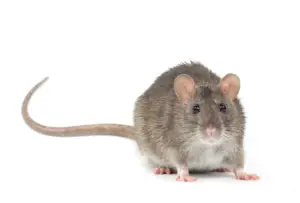
Roof Rat (Rattus rattus) Black Rat
Black in color, good at running over the roof, long-tailed, and medium-sized. Roof rats are excellent climbers and the most common rat species found inside Singapore homes, condominiums, and shophouses.

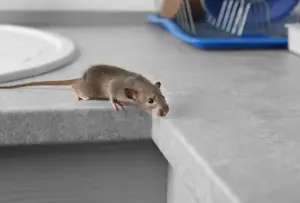
House Mouse / Mus musculus
30 grams in weight, light brown to black, and a huge appetite. In Singapore’s older HDB blocks and shophouses, gaps around pipes and cables behind kitchen cabinets are prime entry points most homeowners never check. Mice contaminate up to 10 times more food than they actually eat, making them a significant food safety risk even in small numbers
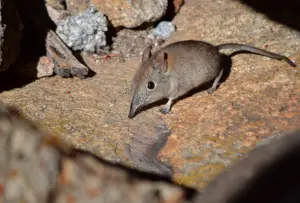
Asian House Shrew (Suncus murinus)
Small in size, 44 g in weight, and light grey-brown to black in color. It is not a rodent and does not carry leptospirosis, but it invades kitchens, pantries, and storage areas in search of insects and food scraps.
Our Rodent Control Treatment Process
Every rodent job we take on follows the same three-stage process. We don’t skip steps, and we don’t begin treatment until the inspection is complete.
Inspection & Identification: Before any treatment begins, our technician conducts a full site inspection inside and out. We check roof voids, ceiling cavities, wall penetrations, under-sink spaces, bin areas, and external drains. We identify the species from physical evidence, and you receive a full verbal briefing on findings before we recommend any treatment.
Targeted Treatment & Elimination: Based on the inspection findings, we deploy the right combination of methods, like all-weather bait stations, tracking powder, Snap traps and physical exclusion
Proofing, Prevention & Follow-Up: Treatment removes the current population. Proofing stops the next one. After elimination, we seal confirmed entry points, recommend waste and sanitation improvements based on what we found during the inspection, and provide a written service report.
Get Rodent Control Services
Having rodent infestation problem? Contact us now!!

Rodent Control Singapore Cost Guide
Rodent control costs in Singapore typically range from $440 for a one-time treatment of an HDB flat or condominium, up to $530 or more for bungalows. Costs depend on property size, rodent species, severity of infestation, and the number of visits required to achieve full elimination. Check more from our rodent control cost page.
| Property Type | Ad Hoc — 1 Visit | Monthly Contract — 12 Visits / 12 Months |
|---|---|---|
| HDB | $440 | $1,250 |
| Condominium | $440 | $1,250 |
| Terrace — 1 Storey | $440 | $1,250 |
| Terrace — 2 Storeys | $440 | $1,250 |
| Terrace — 3 Storeys | $440 | $1,250 |
| Semi-D — 1 Storey | $440 | $1,250 |
| Semi-D — 2 Storeys | $440 | $1,250 |
| Semi-D — 3 Storeys | $440 | $1,250 |
| Bungalow — 1 Storey | $530 | $1,500 |
| Bungalow — 2 Storeys | $530 | $1,500 |
Bungalow — 3 Storeys | $530 | $1,500 |
- Call +65 6910 3776 | Get a Free Rodent Control Quote Today
We were proudly featured on!!
showcasing our expertise and commitment to excellence in pest control services.
Berita Harian | Strait Times | AsiaOne



Prevention tips for Rodent Control in Singapore
- Maintain bin centers and garbage chutes properly.
- Clear stray animal feeding.
- Dispose of waste food properly.
- Store food in airtight containers
- Seal cracks and openings.
- Clean crumbs and spills promptly.
- Reduce clutter to eradicate nesting spots for rodents.
- Educate residents about rodent prevention.
Why Is Rodent Control Necessary in Singapore?
1. Year-Round Health Risk
A female roof rat can produce up to 40 pups per year. Singapore’s NEA recorded over 1,000 enforcement actions for rat-related public health lapses in 2024 alone, nearly double the 2023 figures. Rodents carry Leptospirosis, Hantavirus, Salmonellosis, and Rat Bite Fever — diseases that spread through droppings, urine, and the secondary fleas and mites on their bodies.
2. Property Damage
Rodent incisors never stop growing, forcing them to gnaw constantly to wear them down. They chew through electrical cables, water pipes, PVC conduit, wooden structures, and insulation without hesitation. Chewed electrical wiring is a documented cause of residential and commercial fires in Singapore.
3. Food and Inventory Contamination
A single mouse contaminates up to ten times more food than it actually consumes. Rodent droppings, urine, and fur left on food preparation surfaces, utensils, or stored goods create an immediate public health risk. For F&B establishments, a rodent sighting during an NEA inspection can result in immediate suspension of the food business licence.
How to Report a Rodent Problem in Singapore
For rodent activity in public areas — void decks, drains, bin centres, parks, and communal corridors — reports can be submitted through:
- NEA myENV app — download on iOS or Android, tap ‘Feedback’, select ‘Pest: Rats/Rodents’
- OneService app — for HDB common areas and Town Council jurisdiction zones
- NEA online feedback portal — submit with photos at www.nea.gov.sg
For your own home, condominium unit, or private commercial premises, NEA does not dispatch technicians to private properties. You are responsible for arranging treatment through a licensed pest control company.
For same-day rodent inspection and treatment at your home or business, call Termite Specialist Pte Ltd at +65 6910 3776.
Testimonial From Our Clients!
Your Satisfaction Is Our Number 1 Concern. Quality Is Our Priority!
EXCELLENT Based on 214 reviews
 Posted on Google
 Andrew Wang7. August, 2026.Engaged Termite Specialist Pte Ltd for a site assessment, and I am thoroughly impressed by their professionalism and honesty. A big shoutout to their technician, Mr. Ammar, who provided exceptional service and clear, expert advice. Upon inspecting the drywood termite activity on our guest room door, he provided an honest evaluation explaining that the infestation likely originated from within the wood prior to installation (less than 3 years). Instead of hard-selling unnecessary treatments, he advised us to request our contractor or ID to replace the door under warranty, noting that replacing the affected door effectively removes the colony. Best of all, there were no charges for the inspection and report. Highly trustworthy, knowledgeable, and customer-first. Highly recommended!Posted on Google
 Teo6. August, 2026.This is the best termite specialist I engaged so far. They are very professional, with proper and timely follow up. There is also quotation given upon inspection with clear coverage. They provide report for each inspection once you engage them, all with clear explanation and no hidden cost.Posted on Google
 Sherilyn Loh5. August, 2026.Although I did not engage their services eventually, I feel that their responsiveness, helpfulness and professionalism deserves commendation. I contacted them late at night as I had some pressing issues to handle. Roy immediately answered the call and took a detailed history of the situation, and gave honest and helpful advice. Though I could not get an appointment with them that suited my timing, I appreciate him taking the time to speak to me and give me advice though he was not sure I would be engaging his services.Posted on Google
 Evelyn Ang21. July, 2026.Very honest service. They came to my place to do an inspection of a possible hornet infestation and did not charge me for it. I would certainly recommend them.Posted on Google
 J Y8. July, 2026.I would like to thank Mr Ammar for his wonderful job. He helped me located the drywood termite infestation when there was no frass to be seen. He is very knowledgeable and very experienced. I have engaged 3 different pest control company for drywood termite problem before. But only he located the spot that all other pest control technician missed. Well done and thank you again!Posted on Google
 Daniel Lin29. June, 2026.Although I eventually engaged another pest control company due to timing, I still wanted to leave a review for Termite Specialist Pte Ltd. When I reached out on Saturday evening regarding what I suspected was a subterranean termite infestation, they responded promptly via WhatsApp and were patient in answering my questions. During a rather stressful situation, they were professional, courteous, and took the time to provide helpful advice without any pressure or hard selling. Although I didn’t proceed with their services due to timing, I truly appreciated their responsiveness and customer service. Based on my experience communicating with them, I wouldn’t hesitate to consider them in the future. Thank you for your help and professionalism.Posted on Google
 tutiandyuki16. June, 2026.Engaged termite specialist Pte Ltd when we discovered we had termites. Team is very professional and informative on types of termites and the best possible treatment method. Suggested baiting method, revisited every 2 weeks to check on the bait / replenish if necessary. Took around 3 months to eradicate my termite issues! Mine was subterranean termites and the situation was bad as it was in my kitchen cabinets. Roy and his team are so efficient and friendly too, would highly recommend to anyone looking to solve their pest issues. Thank you team ✨Posted on Google
 Jessica G8. June, 2026.I am very grateful for the Termite Specialists' prompt assistance and immediate action when we identified the problem. The team are very professional and knowledgeable, always willing to explain the process and next steps. They punctually attended every 2 weeks, were very respectful of our household activities and completed their inspection and baiting within 15 mins each time. The reporting was thorough and we are very appreciative that they solved this problem for us. Thank you!Posted on Google
 Toon-Hui Ong8. June, 2026.Termite Specialist has been very professional in addressing the termite infestation issues at my home. They made an effort to explain the process and science behind the treatment. I am pleased with the outcome and services.Posted on Google
 Karyin Har6. June, 2026.Highly recommend them.. very good service from start to finish. got a few quotations and they offered competitive rates. Plus they came down to do an inspection. Some companies will not make a trip unless I engage them. They also provide a one yr warranty after the termites extermination for the whole house. While others only provides warranty for spot and worse, 6 mths from the day work start. They also set up a Wa chat grp and provides a report after every visit. Ammar and Fakhrul were very good in helping with the house inspection and termites extermination. Esha is also very prompt in replying to my queries and making appointments. My house is now free from termites. Thank you
FAQ About Rodent Control
request for Pest treatment
Our Specialist Will Get Back To You As Soon As Possible
Service Areas Across Singapore
Central Singapore Areas:
Orchard Road, Somerset, Dhoby Ghaut, Bugis, Raffles Place, Marina Bay, Tanjong Pagar, Chinatown, Clarke Quay, Robertson Quay, Whampoa, Boon Keng,
East Singapore Areas:
Geylang, Paya Lebar, Bedok, Tampines, Pasir Ris, Changi, Simei, and Marine Parade.
West Singapore Areas:
Bukit Batok, Jurong, Tuas, Clementi, Buona Vista, Bukit Timah, Holland Village, Pioneer, Queenstown, and Choa Chu Kang.
North Singapore Areas:
Woodlands, Yishun, Sembawang, Ang Mo Kio, Bishan, Serangoon, Sengkang, Punggol and Hougang.
Premium F&B Districts: Dempsey Hill, Rochester Park, Tiong Bahru, Haji Lane, Kampong Glam, East Coast Park