
Licences, rules and how to check a licensed company before you book.
By Roy Janpire, owner of Termite Specialist · Updated 10 November 2026 · Sources: National Environment Agency (NEA)
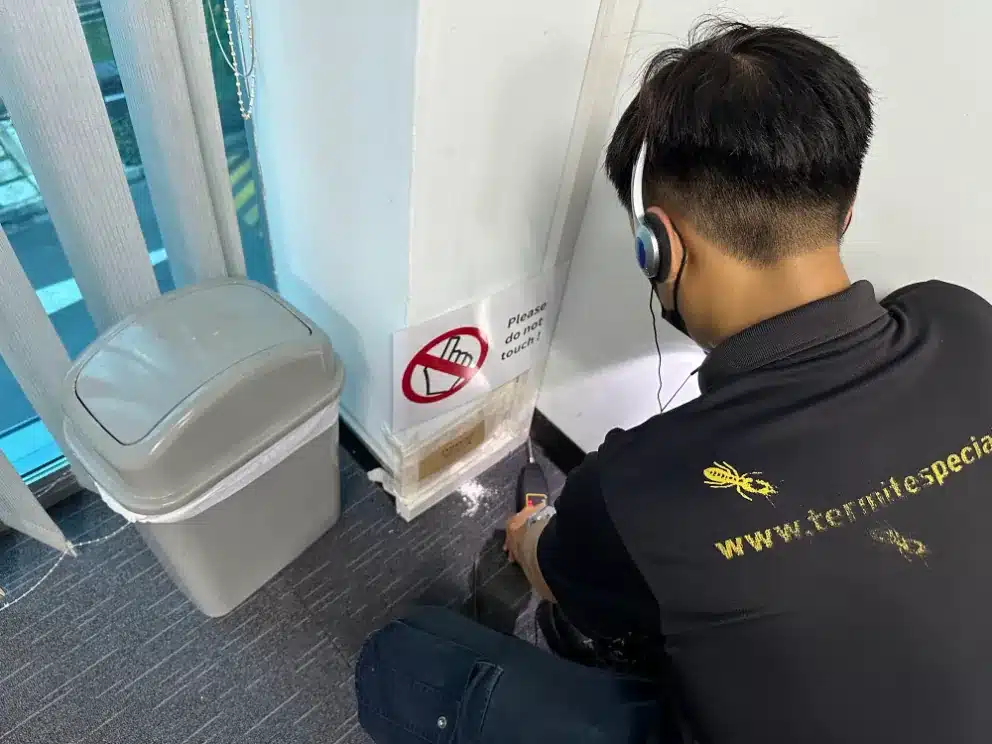
NEA pest control rules at a glance
| Question | Short answer |
|---|---|
| Who regulates pest control? | The National Environment Agency (NEA) |
| Main laws | Control of Vectors and Pesticides Act (CVPA), Environmental Protection and Management Act (EPMA), and the Workplace Safety and Health (WSH) Act |
| Who can be hired? | Only companies registered with NEA as Vector Control Operators (VCOs) |
| Who can do the work? | Staff licensed as Vector Control Technicians (VCTs) or certified as Vector Control Workers (VCWs) |
| Which pesticides? | Only pesticides registered with NEA and carrying the NEA Registration Mark |
| What you should receive | A service report recording the inspection, findings and treatment |
| Fumigation | Needs a separate Fumigator Licence and a Fumigation Permit for each job |
| Restaurants and food shops | The Singapore Food Agency (SFA) requires food establishment operators to have a pest control contract |
| How to check a company | Search NEA’s published list of registered Vector Control Operators |
What NEA regulates and why
NEA’s aim is to keep vector-borne diseases low in Singapore. It names five main vectors: mosquitoes, rats, rat fleas, cockroaches and flies. Dengue spread by Aedes mosquitoes is the best-known example, which is why NEA inspects homes and businesses, removes breeding spots and can take enforcement action when it finds lapses.
Because pest control uses pesticides in homes, offices and food premises, NEA controls three things: who may run a pest control business, who may carry out the work, and which products may be used.
NEA pest control licences: Vector Control Operator, Technician and Worker
| Licence | Who needs it | Key NEA requirements |
|---|---|---|
| Vector Control Operator (VCO) registration | The pest control company | Registered with ACRA, and employs at least one dedicated VCT with at least 3 consecutive years of recent vector control experience. A VCO should only start operating after it receives its certificate of registration. |
| Vector Control Technician (VCT) licence | Technicians who carry out vector control work | Aged 18 or above. A full licence requires the Joint ITE-NEA Certificate in Pest Management or Joint RP-NEA Certificate in Pest Management. A provisional licence is available and can be renewed only once. |
| Vector Control Worker (VCW) certificate | Vector control workers employed by a VCO | Aged 18 or above. A full certificate requires the Joint ITE-NEA Certificate in Pest Control. A provisional certificate can be renewed only once. |
Licences and certificates must be renewed before they expire. An expired licence needs a new application.
Fumigation needs a separate NEA licence
Fumigation is regulated separately under the Hydrogen Cyanide (Fumigation) Act. Anyone who carries out and oversees a fumigation operation needs a Fumigator Licence, and a Fumigation Permit is required before each fumigation job. A Fumigation Management Plan covering safety and emergency steps must be in order before the permit is issued.
What NEA requires on every pest control job
- Licensed people only. The company must make sure every technician and worker sent to your premises is licensed or certified.
- Registered pesticides only. Technicians may only use pesticides registered with NEA that carry the NEA Registration Mark.
- Advance notice and precautions. The client, and neighbouring premises that may be affected, should be told before treatment, with precautions such as removing food, toys and pets before fogging.
- Protective equipment. Technicians wear suitable clothing and footwear and use PPE where required. PPE is mandatory during fogging.
- Thermal fogging notice. The company must notify NEA through its ePortal at least 24 hours before thermal fogging, or two days before on weekends and public holidays.
- A service report. All inspections, findings and treatment work are recorded in a service report, with recommendations, given to the client at agreed intervals.
How to check if a pest control company is NEA-licensed
“NEA-approved” is not an official licence name. What you can check is whether the company is a registered Vector Control Operator and whether its staff are licensed.
- Search NEA’s list of registered pest control companies. NEA publishes a downloadable list of registered Vector Control Operators on its Vector Control Operator page. Look for the company’s exact registered name.
- Ask the technician for their licence. Every person treating your home should be a licensed VCT or certified VCW.
- Check the product. NEA-approved pesticides, including baits, carry the NEA Registration Mark.
- Ask for a service report. You should receive a written record of what was found and what was done.
- Agree the scope in writing. NEA advises clients to set out the scope of work in the contract and to monitor the work done.
NEA and SFA rules for restaurants and food businesses (F&B)
Restaurants, cafes and other food businesses deal with two agencies. The Singapore Food Agency (SFA) requires operators of food establishments to keep their premises free of pest infestations and to have a pest control contract. NEA regulates the pest control company you hire, and since 1 April 2025 it has tightened enforcement against premises owners for rat-related lapses such as poor refuse management.
- Hire a registered VCO. NEA advises premises with a rat problem to engage a licensed Vector Control Operator, guided by clear contract specifications. See our rodent control in Singapore.
- Expect systematic pest management. Food safety guidelines describe it as advice on housekeeping, inspecting and monitoring the measures in place, and applying suitable pest control methods.
- Prefer physical measures near food. Traps and other physical methods are preferred where pesticides could contaminate food.
- Read every service report. The licensee is responsible for verifying the checks done by the pest control company and acting on the findings.
See how we handle pest control for restaurants and other commercial pest control.
Who is responsible for pest control in HDB flats, condos and landed homes?
| Property | Inside your unit | Common areas |
|---|---|---|
| HDB flat | The home owner | The Town Council (corridors, void decks, refuse chutes) |
| Condominium | The unit owner or tenant | The management corporation (MCST), which must maintain common property |
| Landed home | The home owner, including the garden and drains on the property (see mosquito control for landed homes) | Not applicable |
| Business premises | The business or premises owner | The building’s management |
Premises owners can face NEA enforcement if their premises let pests such as rats and mosquitoes breed. For condos, a 2026 Magistrate’s Court decision found that an MCST breached its duty to maintain common property against subterranean termites by relying only on reactive “search and destroy” treatment instead of proactive in-ground treatment and inspection. Read how preventive termite control in Singapore works.
Whoever is responsible, the same rule applies: if you hire someone for vector control, hire a registered VCO.
How Termite Specialist follows NEA guidelines
- NEA-registered Vector Control Operator. Termite Specialist Pte. Ltd. appears on NEA’s list of registered Vector Control Operators (list as of 30 October 2026).
- NEA-licensed technicians. Every technician who treats a home or business is NEA-licensed.
- Registered pesticides only. We only use pesticides registered for use in Singapore.
- A written service report after every visit. It records what we found and the treatment we carried out.
- Clear explanations. Customers often mention in their Google reviews that we explain the problem and the treatment before we start.
See the full range of services from our NEA-registered pest control company, with published prices, or our residential pest control for HDB flats, condos and landed homes.
Pest control FAQ Singapore: NEA rules
Does a pest control company in Singapore need to be registered with NEA?
Yes. Only companies registered with NEA as Vector Control Operators may be engaged for vector control work, and they should only start operating after receiving their certificate of registration.
Do pest control technicians need an NEA licence?
Yes. Staff of a Vector Control Operator must be licensed as Vector Control Technicians or certified as Vector Control Workers. A full VCT licence requires the Joint ITE-NEA Certificate in Pest Management or Joint RP-NEA Certificate in Pest Management.
How do I check if a pest control company is NEA-licensed?
Search for the company’s registered name on NEA’s list of registered Vector Control Operators, published on NEA’s Vector Control Operator page. You can also ask the technician to show their licence.
What should a pest control service report include?
NEA requires inspections, findings and treatment work to be recorded in a service report. A good report also lists the products used, the areas treated and recommendations to prevent the problem coming back.
Do restaurants in Singapore need a pest control contract?
Yes. The Singapore Food Agency requires food establishment operators to keep their premises free of pests and to have a pest control contract. The pest control company should be a registered VCO.
Does fumigation need a separate licence?
Yes. Fumigation is regulated under the Hydrogen Cyanide (Fumigation) Act. It needs a Fumigator Licence and a Fumigation Permit for each operation.
Can a pest control company fog my estate without notice?
No. For thermal fogging, the company must notify NEA at least 24 hours in advance, or two days in advance on weekends and public holidays, and should notify the client and affected neighbours beforehand.
Are the pesticides used by pest control companies safe?
Pest control companies may only use pesticides registered with NEA that carry the NEA Registration Mark, applied by licensed staff. Follow the technician’s advice on preparation and re-entry times.
Need an NEA-registered pest control company?
Free consultation before you book. Open 24 hours on weekdays, 9 am to 10 pm on weekends.
WhatsApp +65 8896 9256Call +65 6910 3776Sources: NEA, Vector Control Operators, Technicians and Workers; NEA, Pest Control Overview; NEA, Fumigation; NEA, 2025 Year in Review (rat enforcement); NEA, Guidelines on Prevention of Rat and Cockroach Infestations at Food Establishments; NEA, Rat Prevention and Control for Business Owners; Ministry of Sustainability and the Environment, Parliament reply on rat control; Lee & Lee, MCST duty and termites (2026); NEA, List of Registered Vector Control Operators (as of 30 October 2026); My Nice Home (HDB).