
Written by our NEA-licensed pest control technicians at Termite Specialist Pte Ltd, based on over 800 cockroach inspections conducted across Singapore HDB flats, condos, and landed properties.
Cockroaches are nocturnal. By the time you see one during the day, dozens more are hiding inside your walls, cabinets, and drains. Knowing the early signs of cockroach infestation in Singapore lets you act before a small problem becomes a confirmed colony.
Not sure what you are seeing? Request a Cockroach Treatment Quote or WhatsApp a photo to +65 6910 3776 to our team.
How to Know If You Have a Cockroach Infestation
One cockroach spotted at night near a drain does not confirm an infestation. It may have entered through a floor trap from a shared drain. If you find two or more of the signs below at the same time, you have an active infestation that needs treatment.
The rule for Singapore homes: cockroaches visible during daylight hours always indicate a large population. Healthy colonies stay hidden. When overcrowding forces them into the open during the day, the colony is already well-established.
8 Common Signs of Cockroach Infestation in Singapore
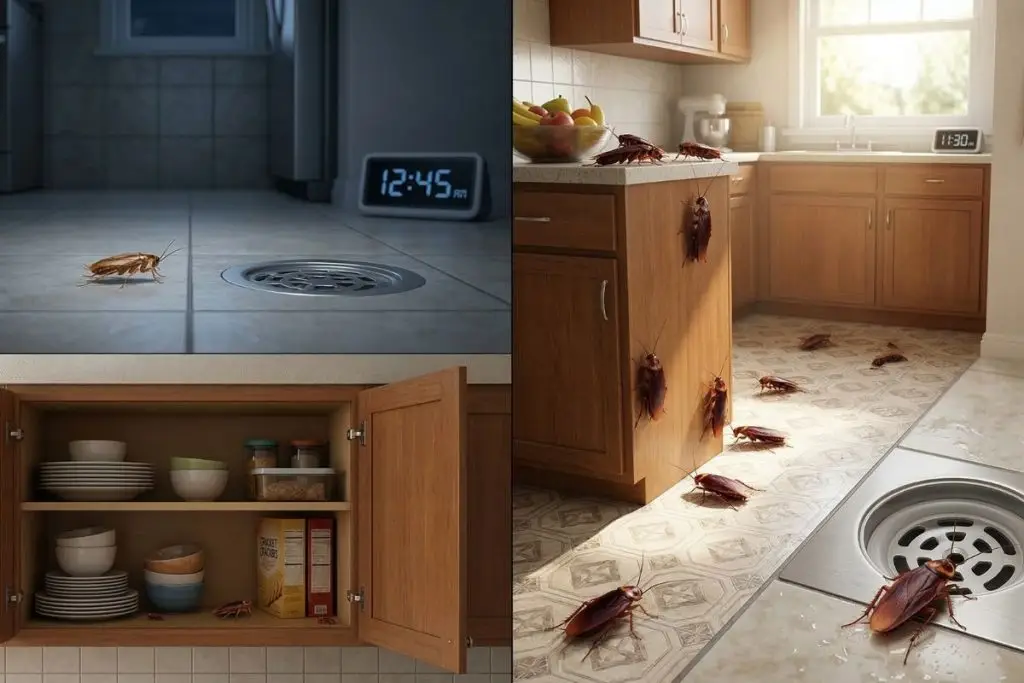
1. Live Cockroach Sighting
A single nighttime sighting near a drain is low severity. Multiple sightings, sightings in more than one room, or any sighting during daylight hours are high-severity signals.
When you see one, note three things:
- Size: 12 to 15mm is a German cockroach. 35 to 40mm is an American cockroach
- Time: Daytime sighting means the colony is already large
- Location: Inside a cabinet means a German cockroach. Near a floor trap or drain means American cockroach
2. Cockroach Droppings
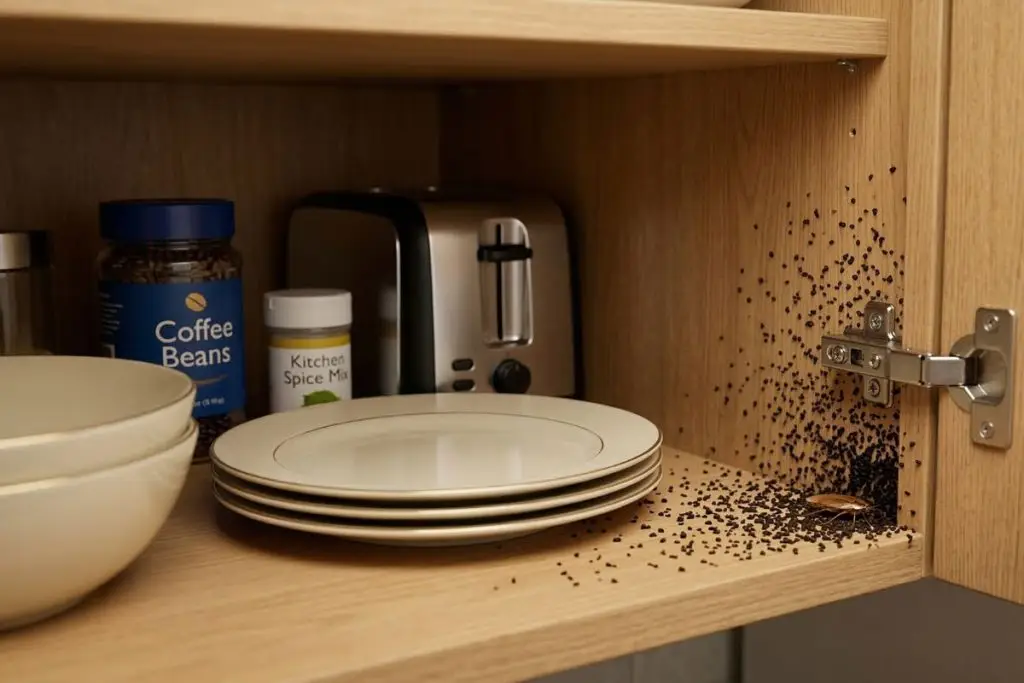
Droppings appear long before you see a live cockroach. They are the most reliable early signs.
- German cockroach droppings: Black or dark brown specks the size of ground coffee, found in clusters inside cabinet corners, along cabinet hinges, and behind electrical appliances
- American cockroach droppings: Larger cylindrical pellets with ridged edges, found near floor traps, toilet bases, and rubbish chute areas
Check inside every kitchen cabinet corner. If you see specks resembling black pepper, there is a German cockroach presence.
3. Smear Marks
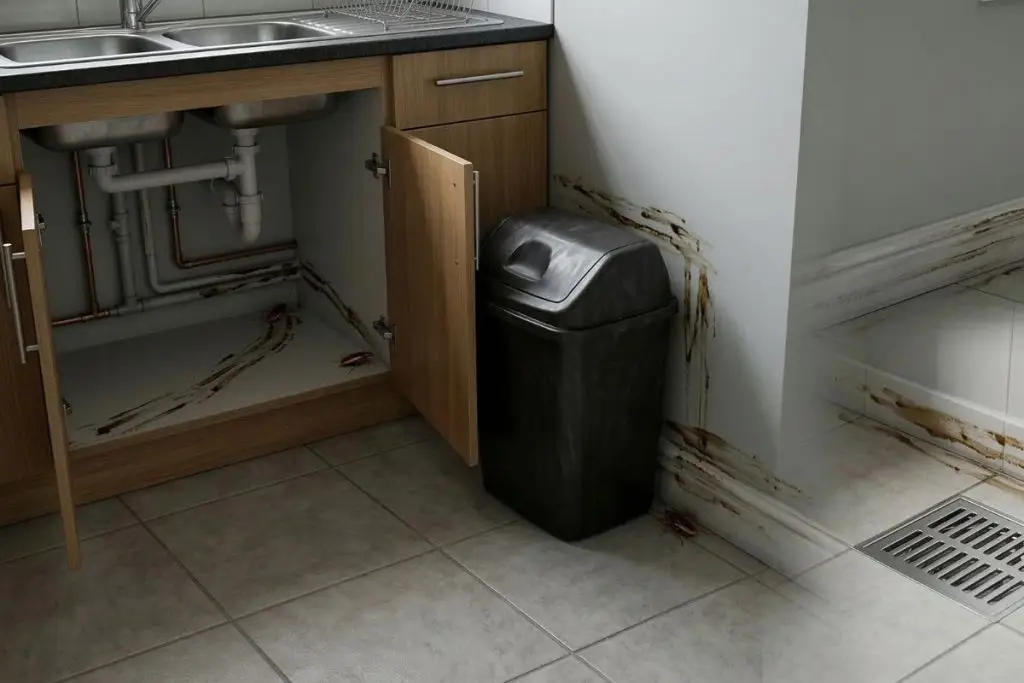
Cockroaches leave dark brown, irregular streaks along surfaces they travel repeatedly. In Singapore homes, smear marks appear most commonly along:
- The wall edge behind the kitchen bin
- The pipe runs under the kitchen sink
- Skirting boards leading from the rubbish chute access door to the kitchen
- The base of the bathroom walls near the floor trap.
Smear marks confirm a regular cockroach travel route and an established population, not a single passing insect.
4. Egg Cases
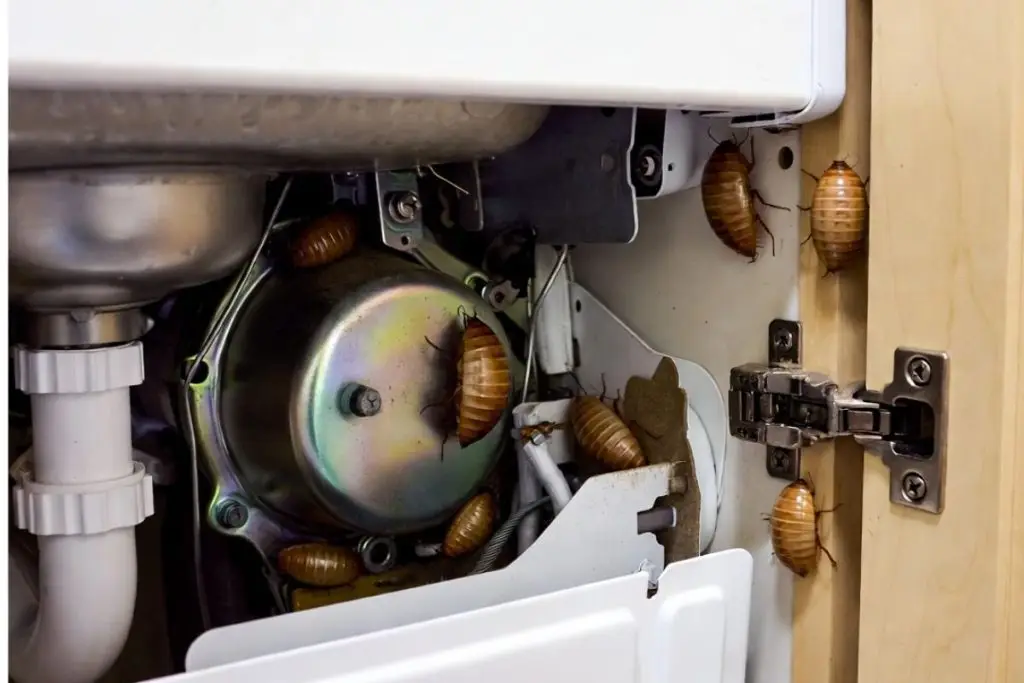
A cockroach egg case is a small, oval, brown casing roughly 8 to 10mm long. Each case contains 30 to 48 eggs for German cockroaches and 14 to 16 eggs for American cockroaches. One egg case confirms that breeding is happening inside your property.
Where to find them in Singapore homes:
- Behind the refrigerator, glued to the back panel or the compressor area
- Inside the cabinet door, hinges along the kitchen wall
- Under the kitchen sink behind the P-trap pipe
- Behind loose tiles or gaps in the kitchen backsplash
German cockroaches glue their egg cases to surfaces inside harborage areas. One egg case means there are almost certainly more.
5. Shed Skins
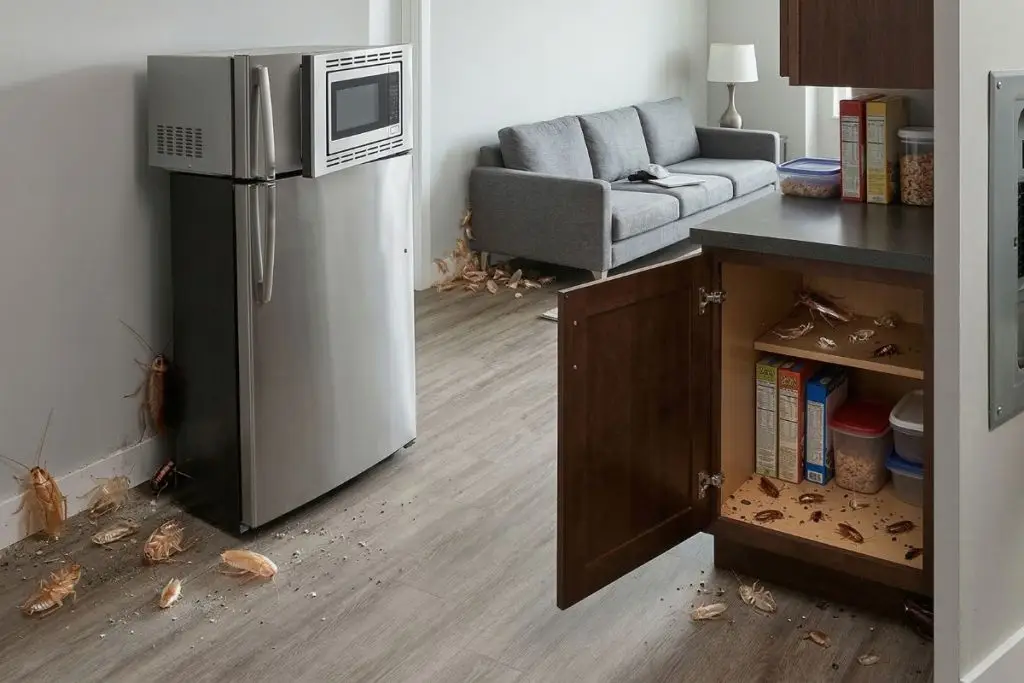
Cockroaches shed their exoskeleton six times as they grow from nymph to adult. These translucent, cockroach-shaped husks are left near nesting areas and confirm a breeding colony inside the property.
Where to find shed skins:
- Under and behind kitchen appliances
- Inside kitchen cabinets near food storage
- Behind furniture pushed against the walls
- Inside electrical panels and meter boxes
Finding shed skins in multiple size stages confirms the colony has been breeding for several months. The smaller the youngest skin found, the more recently the colony produced a new generation.
6. Musty Odour
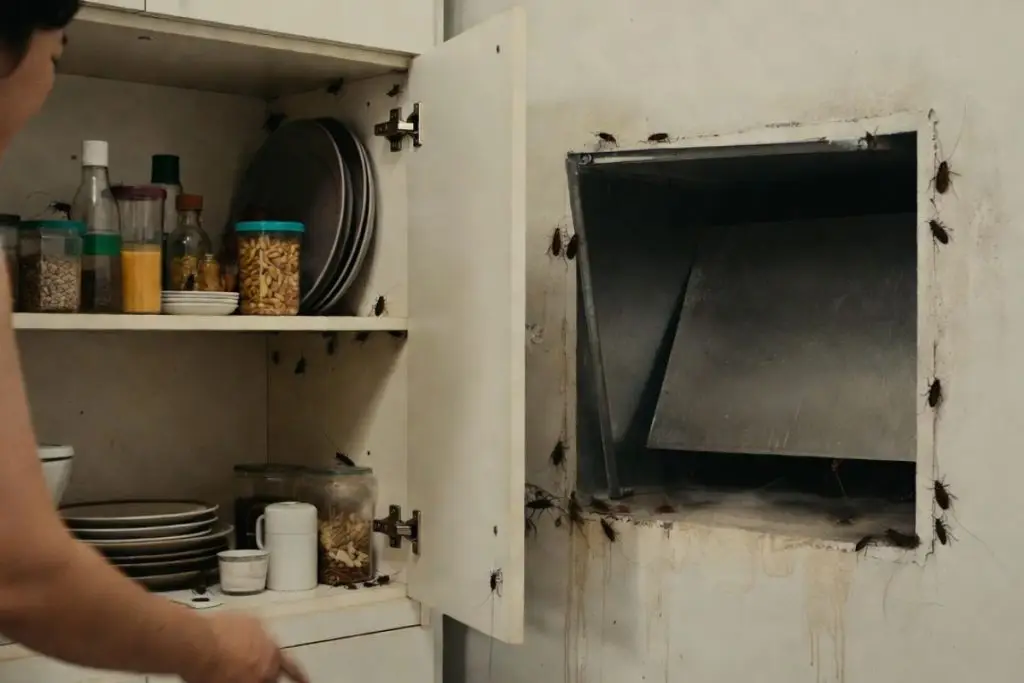
An active cockroach colony produces a distinctive oily, sour, or faintly sweet smell, similar to wet cardboard or an old bin area. In Singapore’s humid climate, this smell concentrates quickly in enclosed spaces.
Where homeowners notice it first:
- Inside kitchen cabinets when opened in the morning
- Near the rubbish chute access panel
- Inside electrical meter boxes in the service yard
- Around the base of the toilet in poorly ventilated bathrooms
A persistent musty smell that does not go away after cleaning indicates a large hidden colony.
7. Chew Marks and Damaged Packaging
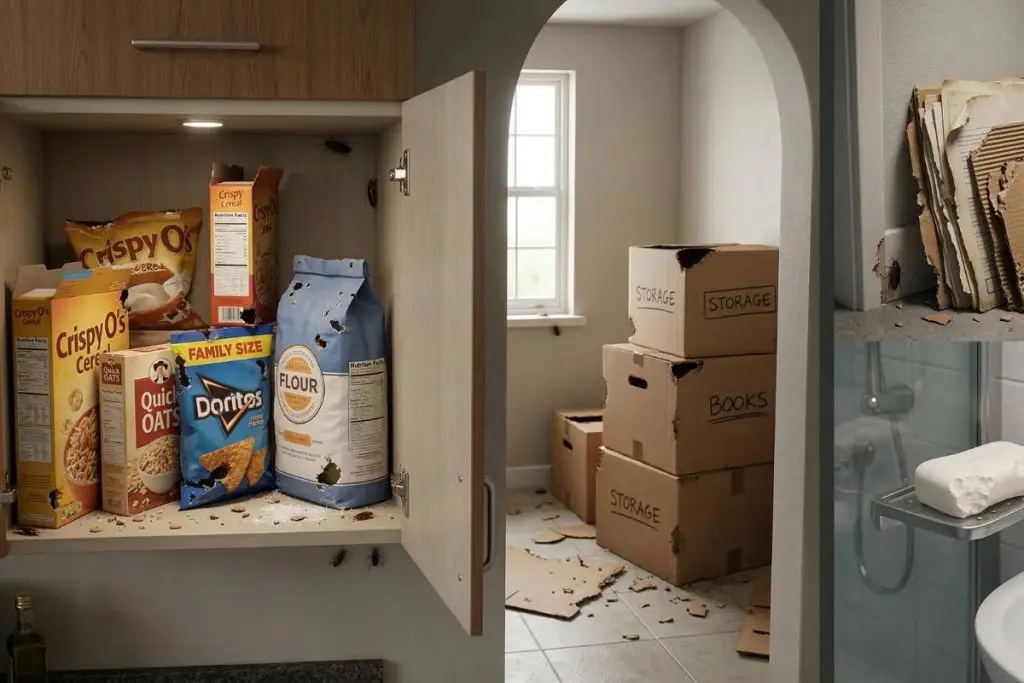
Cockroaches feed on food packaging, cardboard, paper, soap, and fabric. Look for:
- Irregular bite marks or holes in food packaging stored in lower cabinets
- Damaged cardboard boxes in service yards or storerooms
- Bite marks on bar soap in bathroom areas
- Nibbled edges on cardboard stored in the bomb shelter or utility room
Chew marks across multiple locations indicate a large population moving freely between rooms.
8. Sounds at Night
Large cockroach populations produce faint rustling or skittering sounds at night when activity peaks. In Singapore, HDB flats and condos, this is most audible:
- Inside the false ceiling voids above the kitchen
- Inside the kitchen cabinet panels, when the house is quiet
- Behind the refrigerator after midnight
- Inside wall voids adjacent to wet areas
If you hear faint movement inside walls or cabinets at night, do a morning check for droppings before drawing any conclusion.
German Cockroach vs American Cockroach Signs
| Sign | German Cockroach | American Cockroach |
|---|---|---|
| Droppings | Black specks inside cabinets | Cylindrical pellets near drains and floor traps |
| Egg cases | Glued inside cabinet hinges and behind appliances | Found in damp outdoor areas and drain voids |
| Sighting location | Daytime sighting means a severe colony | Near toilet, floor trap, rubbish chute, corridor drain |
| Sighting time | Nighttime near drains is a normal entry behaviour | The entire building if untreated |
| Smell | Sweet, musty odour inside cabinets | Minimal smell unless very large population |
| Spread risk | The entire building is untreated | Controlled once entry points are sealed |
German cockroaches are the higher-risk species in Singapore. They breed entirely indoors and never leave the building. A single female produces up to 400 offspring in her lifetime. An American cockroach problem can be managed by sealing entry points. A German cockroach problem requires gel bait treatment of the colony inside the structure.
How Fast Does a Cockroach Infestation Spread?
A German cockroach colony doubles in size every three to four weeks in Singapore’s warm, humid conditions. A single female entering your home through a shared drain or inside a grocery bag can produce a colony of over 300 individuals within three months without treatment.
In HDB flats and condos, cockroaches travel between units through:
- Shared rubbish chute voids
- Common drain systems running under the building
- Pipe voids between adjacent kitchen and bathroom walls
- Air-conditioning drain pipe channels shared between floors
During inspections in Toa Payoh and Bedok HDB blocks, our technicians traced active German cockroach colonies that originated from a single unit and spread to three neighbouring units through shared pipe voids over six weeks, with none of the affected homeowners aware until treatment began.
Homes near hawker centres in Bedok, Toa Payoh, Geylang, and Tampines face a higher baseline risk of American cockroach entry from outdoor drain systems connected to the surrounding food environment.
When Cockroach Infestation Needs Professional Treatment
If you notice droppings, egg cases, baby cockroaches, musty smells, or repeated night sightings, the infestation may already be active. DIY sprays may kill visible cockroaches, but they often miss hidden harbourage areas behind cabinets, appliances, drains, and wall gaps.
For recurring infestation signs, Termite Specialist PTE LTD offers professional cockroach pest control in Singapore, which can help identify the source, treat hiding areas, and reduce the chance of the problem spreading.